
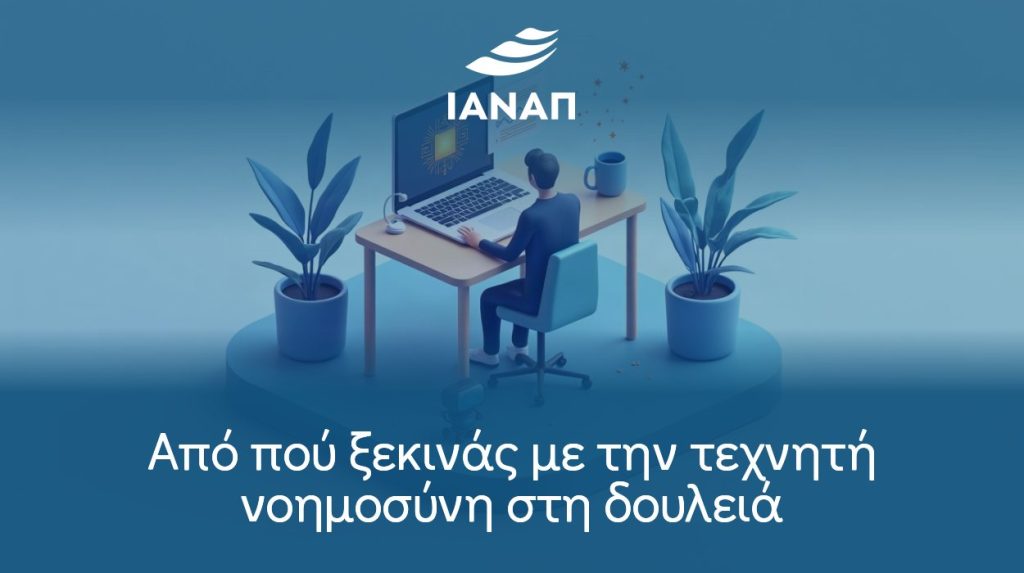
Artificial intelligence has entered everyday work without anyone announcing it. The question is no longer whether you will use it, but where to start so that it makes sense for your own job.
The answer depends on what you do. An administrative employee, a freelancer and a business manager have different problems, and therefore a different starting point.
What changes in practice in office work?
The first gain is not spectacular but part of everyday work: less time spent on repetitive tasks, better organization and control, fewer errors and delays.
This concerns people working in secretarial support, back office and support services – exactly the roles with the heaviest daily workload. The relevant training is covered by the seminar on artificial intelligence for office employees.
What does a business need?
At business level the discussion shifts: artificial intelligence acts as a driver of automation, more effective decision-making and a better customer experience.
Here the goal is not getting familiar with a tool but integrating it into business practices. The program on AI and ChatGPT applications for businesses is aimed at managers of small and medium-sized enterprises, freelancers and new entrepreneurs.
Do you need a technical background?
Not to get started. The introductory programs are aimed at managers, entrepreneurs, teachers, economists and engineers who want to upgrade their digital skills, with no prior IT specialization.
The introduction to artificial intelligence covers the basic concepts, the use of modern tools for automation and analysis, and building simple applications.
Which tools are worth learning first?
It depends on what you produce. If you create visual material – presentations, posters, social media posts, information material – Canva with AI tools gives the fastest results.
If you mainly need presentations and content, there is a corresponding program on Gamma. For social media video editing, there are programs that work with free tools, even entirely from a smartphone.
How do you judge when it does NOT help?
This is the part most often left out. Critically assessing the use and limits of artificial intelligence at work is explicitly included in the objectives of the introductory program, and it is no minor detail.
A tool that produces a text quickly does not guarantee that the text is correct. The value of training is that you learn where to trust it and where not to.
All related programs are in the artificial intelligence seminars category.
Frequently asked questions
Do I need a technical background to get started?
Not for the introductory programs. They are aimed at managers, entrepreneurs, teachers, economists and engineers who want to upgrade their digital skills, with no prior IT specialization.
What does an office employee gain?
Less time spent on repetitive tasks, better organization and control, fewer errors and delays, and greater confidence in using modern digital tools.
What changes at business level?
Artificial intelligence acts as a driver of innovation and automation, supports more effective decision-making and enhances the customer experience.
Which tool should I learn first?
It depends on what you produce. For presentations, posters and information material, Canva with AI tools is a good fit. For presentations and content there is a corresponding program on Gamma, while for social media video editing there are programs that work with free tools or entirely from a smartphone.
Will I also learn when not to trust it?
Yes. Critically assessing the use and limits of artificial intelligence at work is explicitly included in the objectives of the introductory program.