
When the moment comes, will you be ready?
First Aid is not something that concerns only specialists. It is practical knowledge that may be needed in simple, everyday moments. An incident can happen at home, at work, at school or on the street. When it does, what helps most is staying calm and taking the right steps in the right order. First Aid training gives you exactly that. It gives you confidence, organization and the ability to support someone until specialized help arrives.
Many of the most common emergencies have one thing in common. They need to be recognized immediately and handled with basic, correct interventions. Fainting, choking, severe bleeding or cardiac arrest each require different handling, but in every case time and the right response matter. You don’t have to be a health professional to help. You need to have learned what to do and to have practiced it, so that you can apply it safely.
The quality of training is crucial.
First Aid is not theory that stays on paper. These are skills that are learned properly through practice, guidance and realistic scenarios. That is why it matters that training is based on up-to-date guidelines and internationally accepted protocols. The European Resuscitation Council (ERC) is the leading European organization in the field of resuscitation. Its guidelines are based on current scientific evidence and are widely used across Europe, serving as a reference point for training both the public and health professionals.
First Aid training is useful for many people.
Doctors, nurses, paramedics and pharmacists need it in their day-to-day practice. Parents and teachers benefit because they are often around children and need practical skills to feel better prepared. Employees, coaches and athletes work in environments where an incident can happen unexpectedly. Firefighters, police officers and security staff are often called on to be the first to respond in emergencies. At the same time, there are many people who simply want meaningful knowledge for themselves and those around them, without waiting for something specific to happen.
What does IANAP offer?
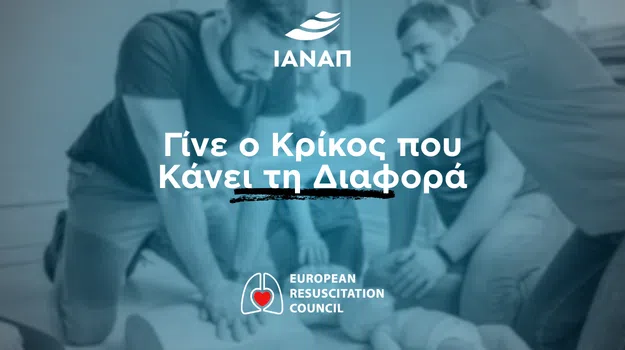
IANAP offers three in-person First Aid seminars aimed at complete training, both in theory and in practice. The First Aid and Adult Basic Life Support (BLS) program focuses on the core skills needed to respond to emergencies in adults. The First Aid and Pediatric Basic Life Support for Infants and Children (PBLS) program adapts the training to the needs of younger ages, covering common scenarios that may arise at home or at school. The First Aid and Instructor Training (BIC) program is aimed at those who want to pass on their knowledge, gaining methodology and teaching skills.
By taking part in the seminars, learners are taught cardiopulmonary resuscitation techniques, become familiar with using an Automated External Defibrillator and are trained to manage incidents such as choking. Training combines theoretical presentation with access to learning material and places strong emphasis on hands-on practice. Realistic scenarios help participants organize their actions and act with greater confidence under pressure.
Certification by the European Resuscitation Council (ERC) adds an extra level of credibility and recognition to the skills acquired. In addition, a free account is created on the official ERC platform, giving access to official sources and learning content. In practice, what you gain is not just a certificate of attendance, but a real skill that can prove useful at many different moments.
First Aid is an investment in readiness and responsibility.
With the right training, you can feel more comfortable helping, supporting others and making the right moves when needed. And that, in the end, is what matters most. Being the person who can stand by others with knowledge and composure. Be the link that makes the difference.
