
First Aid for Infants and Children (Pediatric Basic Life Support – PBLS)
- FOR LIFE
First Aid for Infants and Children (Pediatric Basic Life Support – PBLS)
Managing an emergency in an infant or child is very different from managing one in an adult. Children’s age, body size and particular anatomical features call for specific techniques and suitably adapted movements.
The IANAP Pediatric Basic Life Support – PBLS seminar offers focused theoretical and practical training in recognising and immediately managing life-threatening emergencies in infants and children.
Participants are trained by certified instructors, using modern equipment and special manikins, so that they acquire the knowledge, practical skills and confidence needed at a critical moment.
Also in this category: Hygiene & Food Safety EFET Level 1 · Integrated Pest Management: Disinfestation, Rodent Control and Business Licensing
The programme aims for participants to:
- Recognise an emergency in an infant or child early.
- Safely assess the child’s condition and level of responsiveness.
- Check breathing and signs of life correctly.
- Apply the appropriate cardiopulmonary resuscitation (CPR) techniques.
- Effectively manage foreign body airway obstruction.
- Safely use an automated external defibrillator (AED) in a paediatric emergency.
- Call the emergency services correctly and in good time.
- Protect the child, themselves and bystanders from further danger.
- Develop composure, readiness and confidence in emergencies.
- Acquire useful skills for both their personal and professional lives.
By attending the seminar, you:
- Gain practical knowledge that can help save a life.
- Learn to respond in an organised way rather than with fear or panic.
- Practise realistic scenarios with modern training equipment.
- Improve the safety of the children in your care.
- Develop important personal and professional skills.
- Gain more confidence in handling emergencies.
- Receive European Resuscitation Council certification after successfully completing the programme.
- Have the opportunity to share experiences and concerns with instructors and other participants.
Paediatric first aid training is not meant to create fear. On the contrary, it offers real preparation and helps those who are around children every day feel safer and more able to act.
The programme is aimed at everyone who cares for, supervises or works with infants and children every day, such as:
- Parents and parents-to-be.
- Grandparents and children’s relatives.
- Babysitters and professional carers.
- Nursery nurses and early years educators.
- Teachers and school staff.
- Staff of nurseries and day care centres.
- Coaches and staff of sports academies.
- Health professionals.
- Frontline staff.
- Staff of summer camps, play centres and children’s activity centres.
- Anyone who wants to acquire basic knowledge of paediatric life support.
Theoretical training
Participants learn about:
- The main differences between managing adults, children and infants.
- Approaching an emergency safely.
- Assessing responsiveness and breathing.
- Activating the emergency services.
- The basic principles of paediatric cardiopulmonary resuscitation (CPR).
- Managing airway obstruction.
- Using an automated external defibrillator (AED).
- Preventive measures to avoid further injury.
Practical training
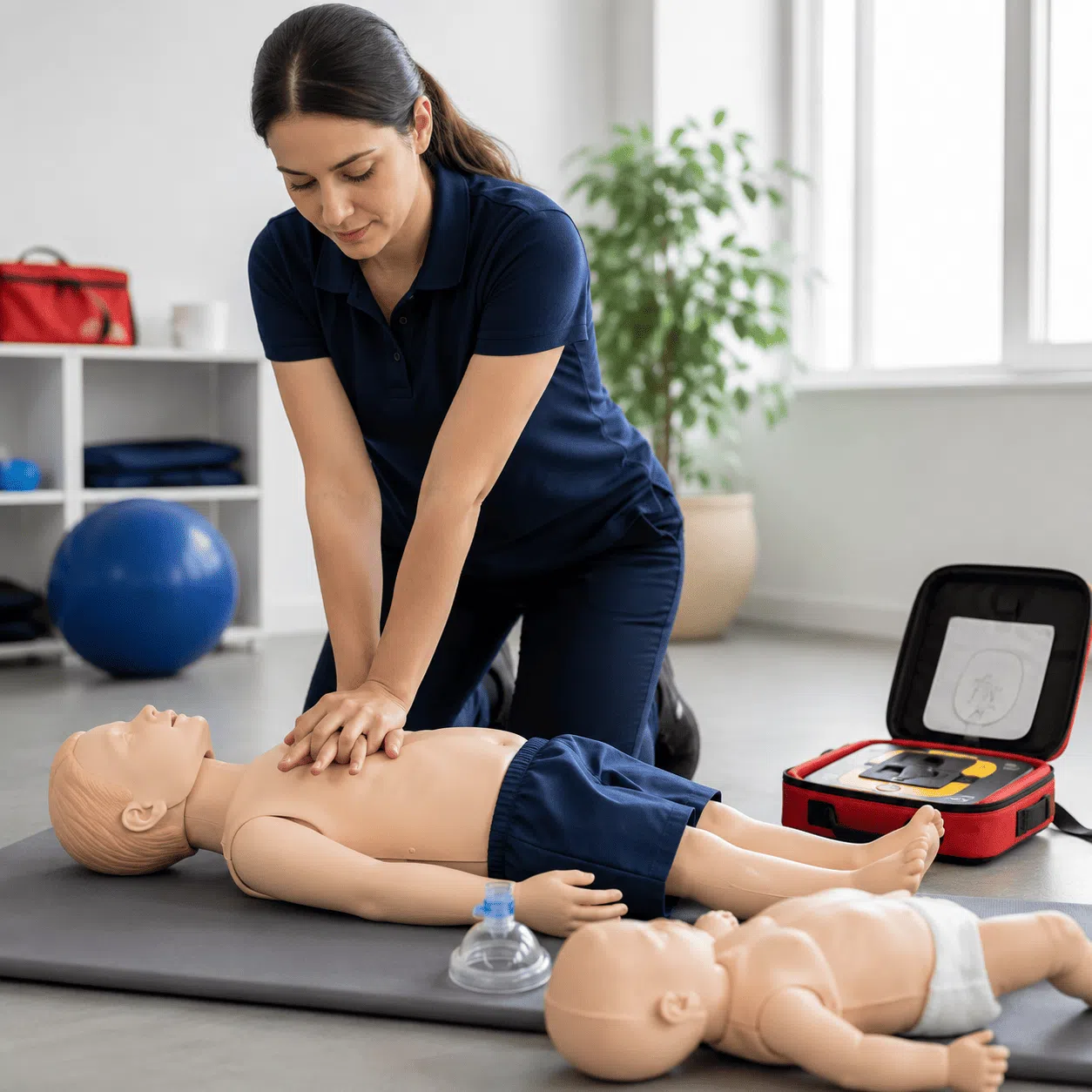
The practical training includes:
- Assessing the condition of an infant and a child.
- Checking responsiveness and breathing.
- Performing chest compressions.
- Giving rescue breaths.
- Managing choking and airway obstruction.
- Using an automated external defibrillator (AED).
- Practising realistic emergency scenarios.
- Feedback from the certified instructors.
On successful completion of the seminar, participants receive certification from the European Resuscitation Council – ERC.
Methodology
Expression of Interest Form
Completing and sending this form to the Employment Development Institute does not create any obligation or commitment to cooperation.